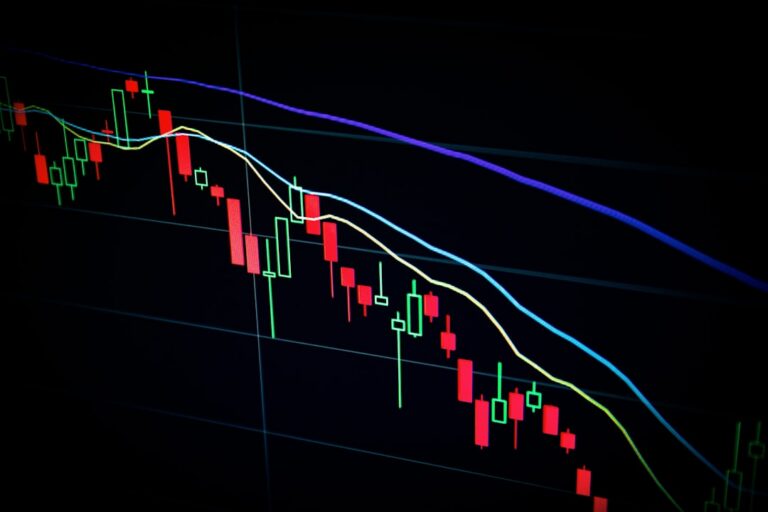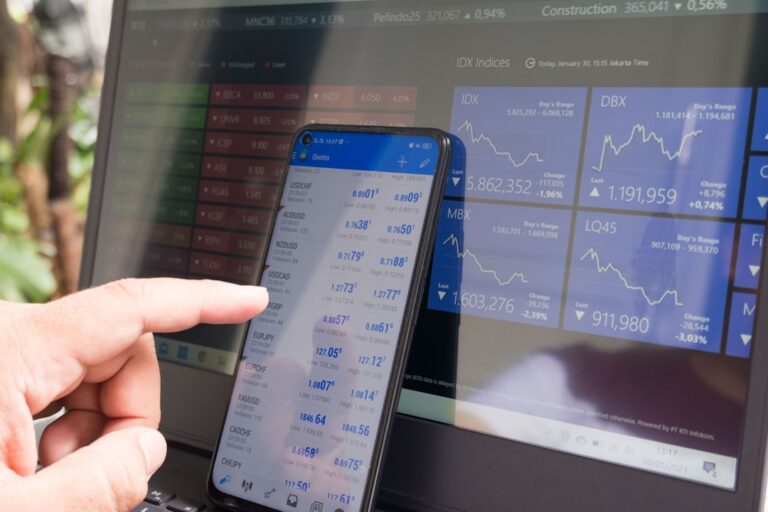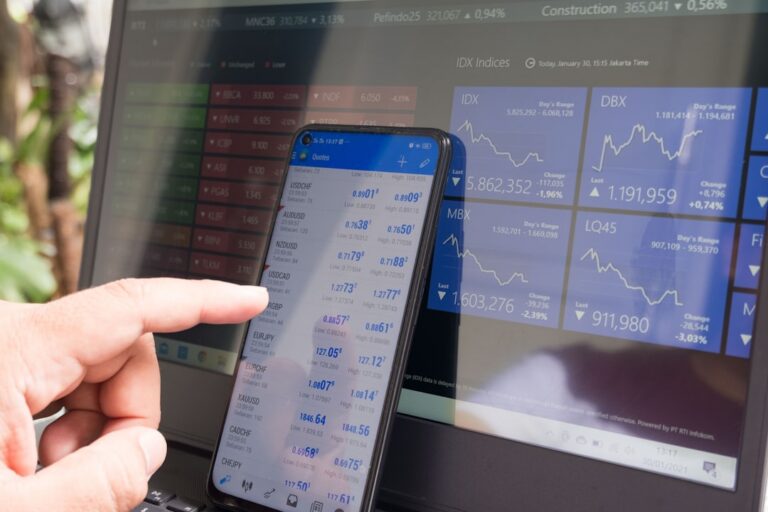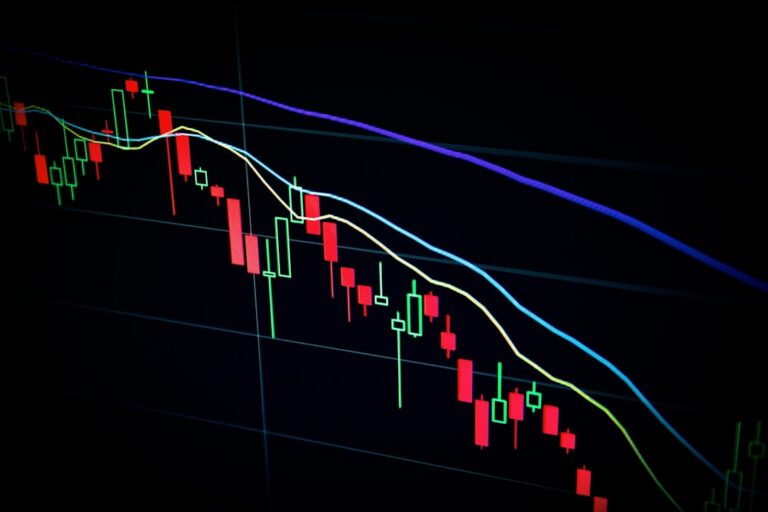
Stop-loss orders automatically close trading positions at predetermined price levels, protecting capital when markets move against you. In the 24-hour forex market where currency pairs can gap hundreds of pips overnight or during major news events, these automated instructions separate disciplined traders from those who watch accounts evaporate. This guide explains how stop-loss orders function mechanically—from standard market stops to trailing orders—and covers strategic placement methods, execution risks including slippage, and platform implementation. You’ll learn the difference between order types, understand why mental stops fail, and discover how to align stop distances with position sizing. No stop-loss strategy eliminates risk entirely, but understanding these tools transforms risk management from abstract concept to systematic practice.
What Is a Stop-Loss Order in Forex Trading?
A stop-loss order automatically closes your trading position when the market moves against you to a specified price level. This pre-set instruction executes without requiring you to monitor the market constantly, making it a fundamental risk management tool for forex traders who cannot watch charts 24 hours a day across global trading sessions.
The Basic Mechanics
When you place a stop-loss order, you’re establishing a price threshold where your broker will automatically exit your position. If you buy EUR/USD at 1.1000 and set a stop-loss at 1.0950, your position closes automatically if the price drops to that level. This limits your maximum loss to 50 pips, regardless of whether you’re at your computer when the market moves.
The order transforms into a market order once triggered, meaning execution is prioritized over the exact exit price. During periods of high volatility or when major economic data releases occur, you may experience slippage—your order executes at a slightly worse price than specified. Some brokers offer guaranteed stop-loss orders for a premium fee, ensuring execution at your exact price even during market gaps.
Pip-Based Placement in Forex
Forex traders typically calculate stop-loss placement in pips rather than dollar amounts. A pip represents the smallest price movement in a currency pair—for most pairs, it’s the fourth decimal place (0.0001). If you’re trading USD/JPY at 150.25 with a 30-pip stop-loss, your exit point would be 149.95 for a long position.
Stop-loss orders differ fundamentally from take-profit orders, which close positions at favorable price levels to lock in gains. While both are automated exit strategies, stop-losses protect capital during adverse moves, whereas take-profits secure profits during favorable ones. Regular market orders execute immediately at current prices, whereas stop-loss orders remain dormant until market conditions trigger them.
Types of Stop-Loss Orders: Market vs. Limit Execution
Forex traders face a fundamental trade-off when setting stop-loss orders: guaranteed execution versus guaranteed price. Understanding this distinction can mean the difference between controlled losses and unexpected account damage during volatile market conditions.
Standard Market Stop-Loss
A standard market stop-loss converts to a market order once your specified price level is reached. The broker executes the trade immediately at the next available price. During normal trading conditions on major pairs like EUR/USD, execution typically occurs within 0-2 pips of your stop level. However, during high-impact news releases or market gaps, slippage can push execution 20-50 pips or more beyond your intended exit point.
This slippage risk becomes critical during weekend gaps. If you hold a position Friday night with a stop-loss at 1.1050 and the market opens Monday at 1.0980 due to geopolitical events, your stop executes at the opening price—70 pips worse than expected.
Stop-limit orders address price uncertainty by setting both a stop price and a limit price. When the stop triggers, the order becomes a limit order rather than a market order. Your position only closes if the market trades at your limit price or better. The risk: if price moves through your limit without touching it, your position remains open and losses continue accumulating.
Guaranteed Stop-Loss Orders (GSLOs)
Some brokers offer guaranteed stop-loss orders that execute at your exact specified price regardless of market gaps or volatility. These eliminate slippage entirely but carry premium costs—typically charged as a wider spread or a fee upon execution.
| Feature | Market Stop-Loss | Stop-Limit | Guaranteed Stop-Loss |
|---|---|---|---|
| Execution guarantee | Yes | No | Yes |
| Price guarantee | No | Yes (if filled) | Yes |
| Slippage risk | High during volatility | None (but may not fill) | None |
| Additional cost | No | No | Yes (premium/wider spread) |
| Best for | Liquid pairs, normal conditions | Range-bound markets | High-impact events, gaps |
Market stop-losses suit most intraday trading on liquid pairs during stable conditions. GSLOs prove valuable when holding positions through weekends, major economic announcements, or trading emerging market currencies prone to sudden moves.
Trailing Stop-Loss Orders: Locking in Profits Automatically
A trailing stop-loss moves with the market price, maintaining a fixed distance from the current value rather than staying at a static level. When you enter a long position on EUR/USD at 1.1000 and set a 50-pip trailing stop, the order initially sits at 1.0950. If the pair rises to 1.1100, your stop automatically adjusts upward to 1.1050, protecting 50 pips of profit while keeping the same risk buffer.
How Trailing Stops Adjust
The trailing mechanism activates only when price moves in your favor. For a long position, the stop rises as price climbs but remains fixed if price falls. This asymmetric behavior locks in gains during favorable moves while maintaining downside protection. You can set trailing stops in absolute pips or as a percentage of price, with most forex platforms supporting both methods.
If EUR/USD advances to 1.1200, your trailing stop moves to 1.1150, securing 150 pips of profit. The position closes automatically if price reverses by 50 pips from the highest point reached. This hands-off approach removes the need for constant monitoring during trending moves.
When to Use Trailing Stops
Trending markets with sustained directional momentum provide the ideal environment for trailing stops. Strong trends allow the stop to follow price higher (or lower for shorts) while capturing extended moves. A currency pair breaking out from consolidation with clear momentum often justifies a trailing stop approach.
Ranging or choppy markets present challenges. Price whipsaws can trigger trailing stops prematurely as they adjust to temporary peaks, removing you from positions before meaningful moves develop. In sideways conditions, fixed stop-losses typically perform better by allowing price room to oscillate without premature exits.
Set trailing distances wide enough to accommodate normal price fluctuations. A 20-pip trailing stop on GBP/JPY, which averages 100+ pip daily ranges, invites unnecessary exits from otherwise valid trades.
Slippage and Execution Risks
Stop-loss orders don’t always execute at your specified price. Slippage occurs when your order fills at a worse level than intended, turning a calculated 50-pip risk into a 70-pip loss—or worse during extreme market conditions.
What Causes Slippage
Slippage stems from the time gap between your stop level being triggered and the actual execution. During normal trading conditions on major pairs like EUR/USD or GBP/USD, expect 0-2 pips of slippage. The market moves fast, and your broker needs milliseconds to process and fill your order.
Several factors amplify slippage risk:
- High volatility periods when price swings accelerate and liquidity thins
- Exotic and illiquid currency pairs with wider spreads and fewer market participants
- Order size relative to available liquidity at your stop price
- Broker execution quality and technology infrastructure
- Network latency between your platform and broker servers
Market Gaps and News Events
Market gaps create the most severe slippage scenarios. When markets close Friday evening and reopen Sunday night, significant news can cause prices to jump 50-100 pips or more from the previous close. Your stop-loss set at 1.1050 might execute at 1.0980 if the market gaps down during the weekend.
High-impact news releases—central bank decisions, employment reports, geopolitical shocks—produce similar effects. The Swiss National Bank’s 2015 decision to unpeg the franc caused stops to fill hundreds of pips away from intended levels, with some traders experiencing losses far exceeding their account equity.
Major economic announcements regularly produce 20-50 pip slippage as liquidity evaporates and volatility spikes. Flash crashes, though rare, demonstrate how algorithmic trading and thin order books can temporarily drive prices to extreme levels before recovery.
Some brokers offer guaranteed stop-loss orders (GSLOs) that execute at your exact price regardless of gaps or volatility, typically charging a premium or wider spread for this protection. Standard stop-losses carry no such guarantee—they ensure execution, not price.
Strategic Stop-Loss Placement Methods
Determining where to place a stop-loss separates disciplined traders from gamblers. The difference between a stop positioned at 30 pips versus 50 pips can mean the difference between preserving capital and depleting your account through repeated small losses.
The 1% Risk Management Rule
Professional traders typically risk no more than 1% of their total trading capital on any single trade. This framework creates mathematical resilience: losing ten consecutive trades still leaves 90% of your capital intact.
Here’s how to calculate position size using the 1% rule:
- Determine your risk amount: Multiply account balance by 0.01 (e.g., $10,000 × 0.01 = $100 maximum risk)
- Measure stop-loss distance: Calculate pips between entry and stop level (e.g., 50 pips)
- Calculate position size: Divide risk amount by stop distance in monetary terms (e.g., $100 ÷ $50 = 2 micro lots for a pair where each pip = $1)
This approach forces you to adjust position size rather than compromising on stop-loss placement, ensuring consistent risk exposure across all trades.
Technical Analysis-Based Placement
Technical levels provide logical stop-loss locations because they represent zones where price behavior historically changes. Effective placement requires positioning stops beyond—not directly at—these levels.
Key technical methods include:
- Support and resistance levels: Place stops 5-10 pips beyond significant horizontal levels to avoid stop-hunting by institutional traders
- Average True Range (ATR): Use 1.5× to 2× the daily ATR to accommodate normal volatility without excessive risk
- Fibonacci retracement levels: Position stops beyond the next Fibonacci level (e.g., if entering at 38.2% retracement, place stop past 50% level)
- Moving averages: Set stops 10-15 pips beyond key moving averages (20-day, 50-day, or 200-day)
Currency pair volatility demands different stop distances. EUR/USD might require 20-30 pip stops during normal conditions, while GBP/JPY often needs 50-80 pips due to higher volatility. Stops placed too tight trigger frequently, generating trading costs without allowing trades room to develop. Conversely, excessively wide stops violate proper risk management and expose capital to unnecessary drawdown.
Stop-Loss Hunting and Market Transparency
Your broker can see your stop-loss orders. This fact fuels persistent concerns about price manipulation designed to trigger client stops before reversing direction—a practice known as stop-loss hunting.
The mechanics create understandable suspicion. When you place a stop-loss with your broker, that order sits on their server. Market-maker brokers executing trades internally have complete visibility into where clusters of stop orders accumulate. This information asymmetry has led to allegations that some brokers artificially spike prices to trigger stops, profiting from client losses or collecting the spread on forced executions.
Evidence of systematic manipulation remains difficult to prove. What traders interpret as stop-hunting often reflects legitimate market behavior. Large institutional orders naturally push prices through technical levels where retail stops concentrate. Support and resistance zones attract stop placements from thousands of traders, creating liquidity pools that institutional traders exploit through normal trading activity.
The risk profile varies significantly by broker type. Unregulated or poorly regulated market-makers operating in offshore jurisdictions face minimal oversight and potential conflicts of interest. ECN and STP brokers routing orders directly to liquidity providers have less incentive to manipulate prices, though they cannot control interbank market dynamics.
Practical mitigation strategies include:
- Trading exclusively with regulated brokers under FCA, ASIC, or equivalent oversight
- Avoiding obvious technical levels for stop placement (round numbers, major support/resistance)
- Setting stops based on volatility measures rather than chart patterns visible to all traders
- Using mental stops with disciplined manual execution for larger accounts
- Monitoring execution quality and slippage patterns across multiple trades
Distinguishing between manipulation and volatility requires objectivity. A 15-pip spike that triggers your stop during NFP announcements reflects market reality, not broker malfeasance. Repeated patterns of micro-spikes during quiet Asian sessions that exclusively hit stop levels before immediate reversals warrant closer scrutiny.
Mental Stops vs. Automated Orders
Traders who rely on mental stops—the practice of manually closing positions when losses reach a certain level—fail to execute their exit plan roughly 60-70% of the time. The gap between intention and action widens dramatically when real money sits in losing positions.
The failure mechanism is psychological. A trader watches EUR/USD drop through their planned stop level at 1.0850, but hesitates. “Maybe it will bounce back in a few minutes.” Fear of realizing the loss triggers denial. Hope replaces discipline. The position continues bleeding capital while cognitive biases—loss aversion, anchoring to the entry price, recency bias from previous recoveries—hijack rational decision-making.
Automated stop-loss orders eliminate this emotional interference entirely. Once placed with your broker, these orders execute automatically when the market reaches your specified price. No decision required. No opportunity for hope or fear to interfere. The order management system handles execution mechanically, typically within milliseconds of the trigger price being reached.
The performance difference is measurable. European Securities and Markets Authority data shows that 70-80% of retail forex traders lose money, with inadequate risk management identified as a primary cause. Traders using consistent automated stops demonstrate significantly better capital preservation than those relying on discretionary exits.
Automated orders also function during periods when you cannot monitor positions—overnight, during work hours, or when internet connectivity fails. A mental stop offers zero protection if you’re asleep when unexpected news moves the market 200 pips against your position. The automated order works regardless of your availability or emotional state.
Professional traders treat automated stops as non-negotiable infrastructure, not optional tools. The order exists before the trade opens, protecting capital without requiring willpower or constant attention.
Setting Stop-Loss Orders on Trading Platforms
Most forex traders access stop-loss functionality through one of three dominant platforms: MetaTrader 4, MetaTrader 5, or cTrader. Each platform handles stop-loss orders differently, with varying degrees of automation and customization available to traders.
Platform Capabilities
MetaTrader 4 remains the most widely used platform globally, offering straightforward stop-loss implementation through its order entry window. Traders can set standard stop-loss levels in pips or price points, with trailing stop functionality built directly into the terminal. MetaTrader 5 expands on this foundation with additional order types and improved execution algorithms, though the core stop-loss mechanics remain similar.
cTrader distinguishes itself with a more intuitive visual interface where traders can drag and drop stop-loss levels directly on price charts. The platform also supports more sophisticated automation through cAlgo, allowing traders to program complex stop-loss logic beyond standard trailing stops.
Key features across platforms:
- Standard stop-loss orders at fixed price levels
- Trailing stops that move automatically with favorable price movement
- Time-based stops that close positions after specified durations
- OCO (One-Cancels-Other) orders linking stops with profit targets
- Partial position closure at stop levels
Setting and Modifying Stops
Placing a stop-loss typically requires three inputs: position size, entry price, and stop-loss distance. On MetaTrader platforms, traders enter these values in the “New Order” window before execution. For existing positions, right-click the trade in the terminal window and select “Modify Order” to add or adjust stop levels.
cTrader simplifies modifications through direct chart manipulation—click the position line and drag the stop marker to the desired price level. All platforms allow stop-loss adjustments while trades remain active, though brokers may impose minimum distances from current market price to prevent gaming during high volatility.
Conclusion: Making Stop-Loss Orders Non-Negotiable
Stop-loss orders are essential risk management infrastructure, not optional add-ons to consider after opening positions. Understanding the mechanical differences between market stops, stop-limits, and guaranteed orders enables you to select the appropriate tool for specific market conditions. Placement strategies—whether based on the 1% rule, ATR multiples, or technical levels—transform abstract risk concepts into concrete capital protection.
No stop-loss strategy eliminates risk entirely. Slippage during volatile periods, weekend gaps, and flash crashes remain realities that even guaranteed stops cannot fully mitigate across all market scenarios. The difference lies in systematic protection versus hope-based position management. Automated orders execute without emotional interference, functioning when you’re unavailable and removing the psychological barriers that cause mental stops to fail 60-70% of the time.
Practical implementation requires three commitments: place automated stops before every trade opens, align position size with stop distance to maintain consistent risk exposure, and trade exclusively with regulated brokers whose execution quality you’ve verified through demo testing. Practice stop-loss placement on demo accounts until the calculation process becomes automatic. Develop a consistent risk management framework that defines maximum per-trade risk, daily loss limits, and stop-adjustment rules. Treat stop-loss orders as non-negotiable components of your trade plan—the price you pay for participating in markets that can move against you at any moment.